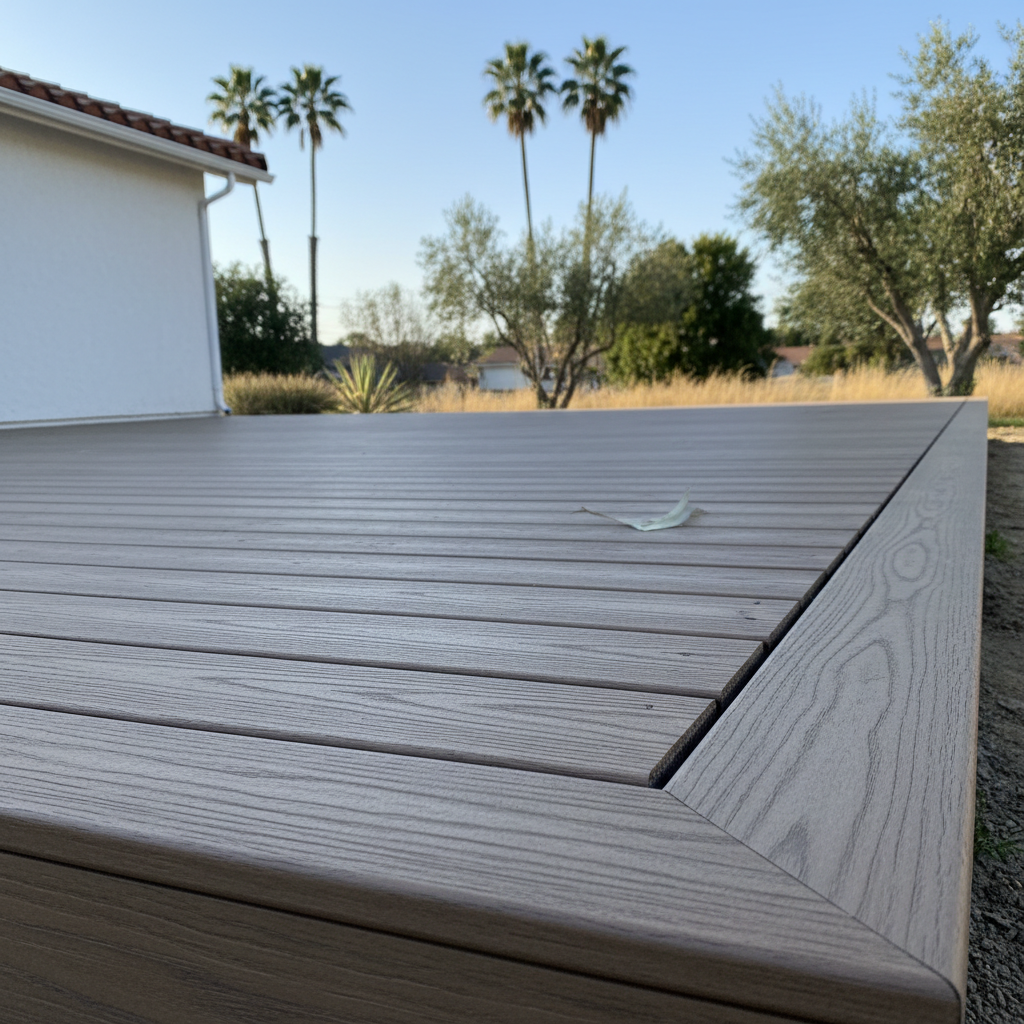
Alright, let's talk composite decks. I get a lot of questions about these, and for good reason. They've come a long way, and folks in Inglewood are always looking for smart, durable options for their outdoor spaces. You want to know if it's right for your home, how it holds up, what it really costs. So, I've put together answers to the questions I hear most often. No fluff, just the straight goods from someone who builds these things every day.
What exactly is composite decking made of? Is it just plastic?
That's a common misconception. It's not just plastic, though plastic is definitely a component. Most modern composite decking is a blend of wood fibers – things like sawdust, wood chips, and other reclaimed wood materials – and recycled plastics, such as polyethylene or polypropylene. These are mixed with bonding agents, pigments for color, and UV inhibitors. The wood gives it a natural feel and some structural integrity, while the plastic encapsulates the wood, protecting it from moisture, rot, and insects. It's a pretty clever combination, actually.
How well does composite decking handle the Inglewood sun and heat? Will it fade or get too hot?
This is a big one for us here in Southern California, right? We get a lot of sun, especially during those long summer months. Modern composite decks are engineered to resist fading much better than older generations. They incorporate those UV inhibitors I mentioned, and many brands now have a protective cap layer that's specifically designed to maintain color. Will it get hot? Yes, any dark surface in direct sun will get hot, including composite. Lighter colors will be cooler underfoot, just like with concrete or natural wood. If you're sensitive to heat, or if your deck gets full, all-day sun, I'd definitely steer you towards lighter shades. We've built plenty of decks in areas like Ladera Heights where the sun just beats down, and color choice makes a real difference.
Does composite decking really require no maintenance?
I wish I could say 'absolutely none,' but that's not entirely accurate. It's low maintenance, not no maintenance. You won't be sanding, staining, or sealing it every couple of years like you would with a traditional wood deck. That's a huge time and money saver. But you'll still need to clean it. Dirt, pollen, leaves, and even food spills can accumulate. A simple sweep and occasional washing with soap and water – or a pressure washer on a low setting – will keep it looking great. Think of it like washing your car; it needs a bath now and then to stay presentable.
What's the real cost difference between composite and wood?
Upfront, composite decking usually costs more per linear foot than most common wood options like pressure-treated pine or even some redwood. However, that's just the initial material cost. When you factor in the long-term maintenance – the sealing, staining, and potential repairs for wood – composite often becomes more cost-effective over its lifespan. You're paying more upfront for durability and convenience. For a lot of homeowners, especially those who don't want to spend their weekends maintaining a deck, that long-term value is well worth the initial investment.
Can composite decks get scratched or damaged?
Absolutely. It's tough, but it's not indestructible. Heavy furniture being dragged, sharp objects, or even dropping a grill tool can scratch or ding the surface. Most reputable brands offer good scratch resistance, but it's not impervious. Just like any surface, you need to be mindful. Using furniture pads, being careful with heavy items, and cleaning up spills quickly will help keep your deck looking good for years. If a board does get significantly damaged, individual boards can often be replaced, which is a big plus.
Are there different grades or types of composite decking I should know about?
Yep, definitely. It's not a one-size-fits-all product anymore. You've got different manufacturers, and within each brand, they often have different lines. Some are solid boards, some are hollow. Some have that protective cap layer on all four sides, some just on the top and sides. The cap layer is a big deal for durability and fade resistance. You'll also find different textures – some mimic wood grain really well, others are smoother. The price usually reflects these differences. Higher-end composites will typically have a thicker, more advanced cap layer, better aesthetics, and longer warranties. It's worth looking at samples and feeling them to see what you like and what fits your budget and expected use.
Hopefully, this clears up some of those burning questions you've had about composite decking. It's a fantastic option for many Inglewood homes, offering a great blend of beauty and low-hassle living. If you're thinking about one for your place, give Inglewood Deck Creations a call, and we can walk through your options.